Once searchers hunting for the crashed Malaysian jet decide to shift from listening for the acoustic signals from the black boxes from the floor of the Indian Ocean to poring over its treacherous terrain, they will have to draw from a whole new set of tools, experts say.

The body of former President APJ Abdul Kalam, who died in Shillong on Monday evening, was carried to Delhi early Tuesday morning by a special aircraft from Guwahati.

'The government's proposal to store citizens' data including Aadhaar data under its Digital India initiative on cloud is violative of the citizens' human rights because the cloud is admittedly beyond India's jurisdiction.'

'The optimistic advice might be "fasten your seat belts" and the pessimistic one might just turn out to be "brace for impact",' says Claude Smadja.

The former finance minister also criticised Prime Minister Narendra Modi over the words he chose to attack his predecessor Manmohan Singh, saying he should remember that the Chair he sat on was used by Pandit Jawaharlal Nehru and even Atal Bihari Vajpayee and hence he should use right language.

The external affairs ministry's files, as distinct from those of the ministry of defence or the agencies, at least from before 1974 should be declassified. And if select files that are more than 40 years old are not to be declassified, the ministry should follow explicit guidelines to justify taking such a view, says Jaimini Bhagwat.

Gurmeet Ram Rahim also made an appeal to his followers to go back to their homes, a development which may come as a big relief to security personnel.

'India should today tell China to provide proper facilities in Minsar for Indian yatris visiting Mt Kailash,' says Claude Arpi.
From Swachh Bharat to spearheading the Make in India campaign, the PMO seems to be at the centre of all policies, writes Nivedita Mookerji.

No account of the 1962 war could be complete without Maxwell's authoritative analysis. Which is why we are reprinting this article which was run on Rediff.com in June 2001.

In a spontaneous outpouring of grief, thousands of people bid an emotional farewell to former President APJ Abdul Kalam who was on Thursday laid to rest with full state honours in his home town here amid chants of "Bharat Mata Ki Jai".

Jammu and Kashmir MLA Ramesh Arora wants momos banned, but are they really unhygienic and harmful?
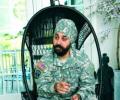
But it will be a giant leap for America when all can serve freely in the US Armed Forces, Major Kamaljeet Singh Kalsi tells Suman Guha Mozumder about the Pentagon's relaxing of rules on religious wear

Fresh tremors were on Sunday felt in various parts of India, including the national capital Delhi, even as the death toll in Saturday's earthquake climbed to 62.

A mere pair of shoes sets off the kind of harsh condemnation Indrani draws in these corridors of justice. That she being a woman who killed her daughter -- never mind that she is an undertrial and the crime has not yet been proven -- apart from making her an object of curiosity, also makes her, by perception, more evil than the men that flood these corridors, facing trial for similar or worse crimes.

It is time to take the sainthood away from Dr Manmohan Singh, says Sudhir Bisht.

'It is highly doubtful that the Trump administration will consider inserting itself into the volatile India-Pakistan dispute.'

The perfunctory management of external affairs has left India's foreign policy establishment largely unprepared to manage the consequences of dramatic international developments, says Nitin Pai.

On the pitches of ramshackle football academies across West Africa, teenage boys chase one another in pursuit of the ball, the chance to impress, and the prospect of a lucrative contract with one of Europe's top teams.

Peter told Judge Jagdale that there was only jewellery in the locker -- some of it that he had "gifted to my wife" and some that "she had received" at the time of their marriage, that the CBI had already inspected the locker in his presence and were aware of what was there.

'For its part, Pakistan often gives safe haven to agents of chaos, violence, and terror.'

A key government official involved in initiatives to make doing business in the country easier said improving the ranking to 50th in a year was not possible but the country could certainly do that over two years.
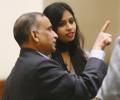
'A senior US diplomat last week asked me when things will go back to normal. I had to tell her that if normalcy meant getting back these perks, it is not going to happen for a very long time, if ever at all,' says Mohan Guruswamy. 'For the Indian public now is outraged that US diplomats have enjoyed all these winking at the rulebook.'

Science in India has developed a great deal since C V Raman, particularly after the country gained Independence but we are yet to win a Nobel prize in physics, chemistry or medicine. Is it a reflection on the quality of Indian science? Or it has to do with the politics of Nobel prizes, as is often believed, asks Dinesh C Sharma.

In the second and final part of his column, Col Anil Athale says the fight between forces of Indian nationalism and Macaulayism aided and abetted by West is going to be long, hard and dirty. The outcome will decide whether India becomes a superpower or continues to wallow in the swamp of underdevelopment.

Something about the big car and its passengers, standing solemnly outside their vehicle, piqued the biker's interest.

'It is important to make a clear distinction between the officers and jawans. The officers retire at 54 and with two extensions can go up to 58 years before they go home. A jawan on the other hand retires at 38. Therefore, to portray a picture that all army men retire young is wrong.'

Biometric authentication is based on the unscientific and questionable assumption that there are parts of human body that does not age, wither and decay with the passage of time.

Views differ on the subject of celebrity endorsement.
The army of the future needs a system of transparency and research. An open sociology of the army is a democratic necessity. An openness of information is a necessity of the army of the future fighting the next peace and next war on behalf of society, says social scientist Shiv Visvanathan.

'India was in no position to wage another war in 1965, having suffered a morale-shattering defeat in 1962. The three services were in the middle of a modernisation and expansion phase and therefore not fully trained or battle-ready.'

The British administration ignored the mounting evidence of violence between Hindus and Muslims... Military historian Barney White-Spunner traces the countdown to the tragedy in his book, Partition.
.jpg)
Ayurvedic expert Dr G G Gangadharan on how the ancient Indian medical practice needs to be propagated in the country of its origin

'We owe our existence to the men in uniform, and we owe it to them to cleanse the armed forces by driving away every bit of corruption that eats into it,' argues Sudhir Bisht.

Images of the events that shaped the world in March.

Amitabh Kant tells Rahul Jacob how India could be made an easier place to do business in and why India's software smarts will give it an edge.

'India is no longer the India of the '70s and the '80s.' 'It's a large country with the fastest growing economy.' 'In working with India, you just can't go and humiliate the nation publicly.' USIBC President Mukesh Aghi tells Aziz Haniffa/Rediff.com about how he advises American companies to do business with India, what he thinks of Modi's government and the way forward for the India-US relationship.
To expect that these past decades of grief, inter-group killings, anxiety and fear will be brushed aside because of the Naga peace accord is being unrealistic. Memories are built on old wounds and they heal slowly. So, it is important to be cautiously optimistic, says Sanjoy Hazarika.

The facts remain cloaked in mystery, but the legend goes that Talpade had created a flying machine powered by mercury and solar energy, and based on ideas outlined in Vedic texts.

Isn't National Intelligence Grid and UIDAI engineered by vested interests, asks Gopal Krishna.
 © 2026 Rediff.com - Advertise with us - Disclaimer - Privacy Policy - Sitemap - Feedback - About us - Terms of use - Grievances